
Signal Hill Mural at Hillbrook Park

When I first started painting murals, there weren’t nearly as many open calls for artists as there are now. I applied plenty of times over the years, but was ultimately never really successful with public art RFPs. After a while, I stopped chasing them and just focused on creating the work that felt right.
But life changes you.
Since becoming a dad, parks and libraries have become part of my everyday routine. They’re no longer just public spaces—they’re where birthdays happen, where kids test their courage on climbing structures, where parents trade stories at the edge of the playground. Over the past few years, I’ve had the chance to paint more murals in parks across Los Angeles, and I’ve seen firsthand how meaningful those spaces can be. So when Signal Hill put out a call for a mural at Hillbrook Park, it felt different. I didn’t hesitate.
Before I design anything, I always try to visit the site in person. You can’t understand a wall through a pixelated photo. You need to experience it, see how people move through the space, notice the obstructions, see the light/shadows, etc. This wall had a deep brick texture with recessed grout—something that doesn’t fully translate in photos—so I decided to create the mural using spray paint to speed up the install process. Most important, there’s the value of just being there, talking to locals and listening.
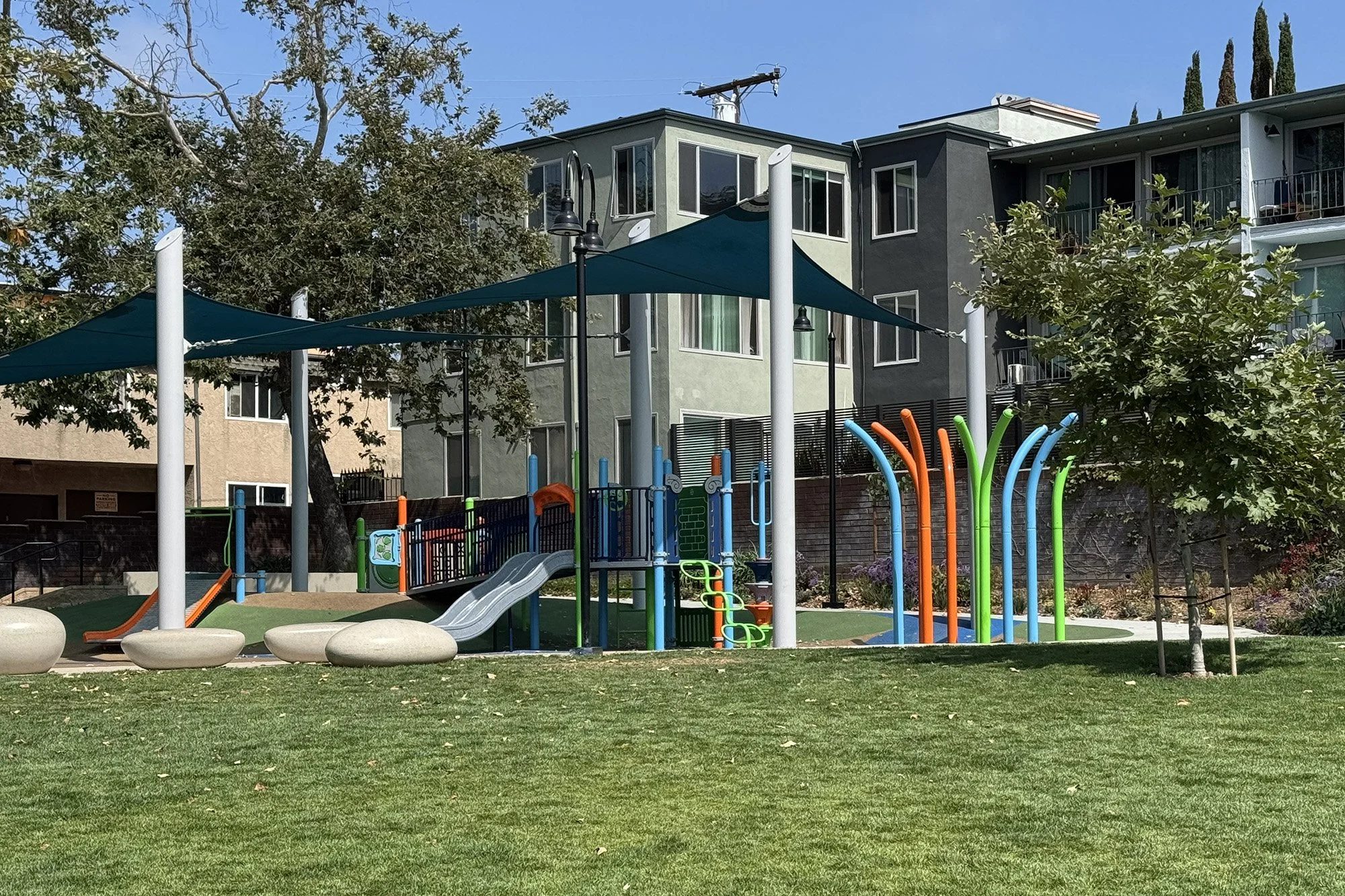
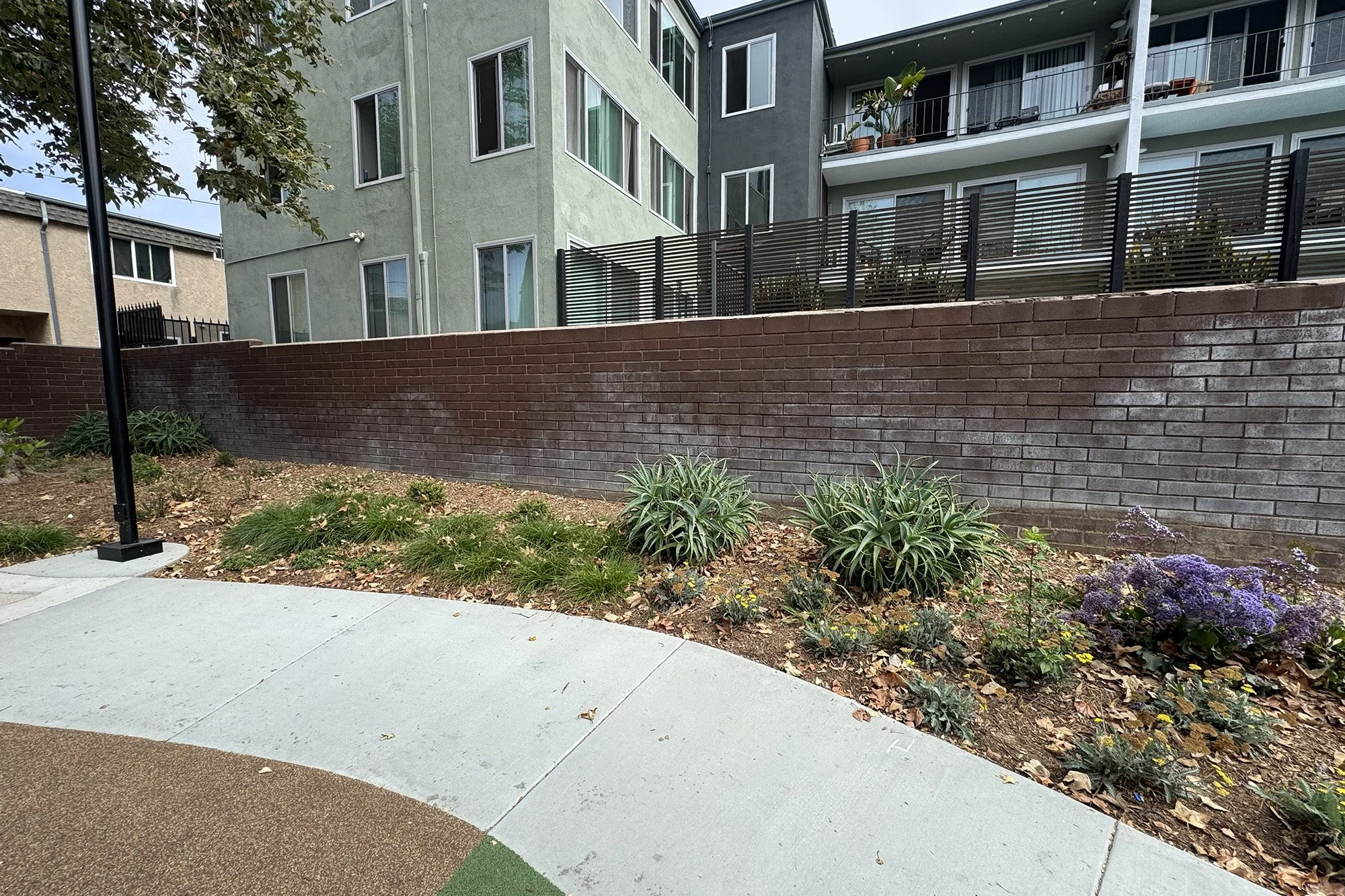
These days, it feels like just about every visual artist can scale their work up to a mural. With the tools available now, going big has never been easier. And honestly, I’m all for more public art out in the world.
But with that accessibility also comes a saturated field. The mural artists who’ve been doing this for years understand that a mural isn’t just about the image — it’s about longevity of the work in various environments. What happens before the first line is sketched matters just as much as what people see in the final photo. The paint on the surface is only as strong as what’s underneath it.
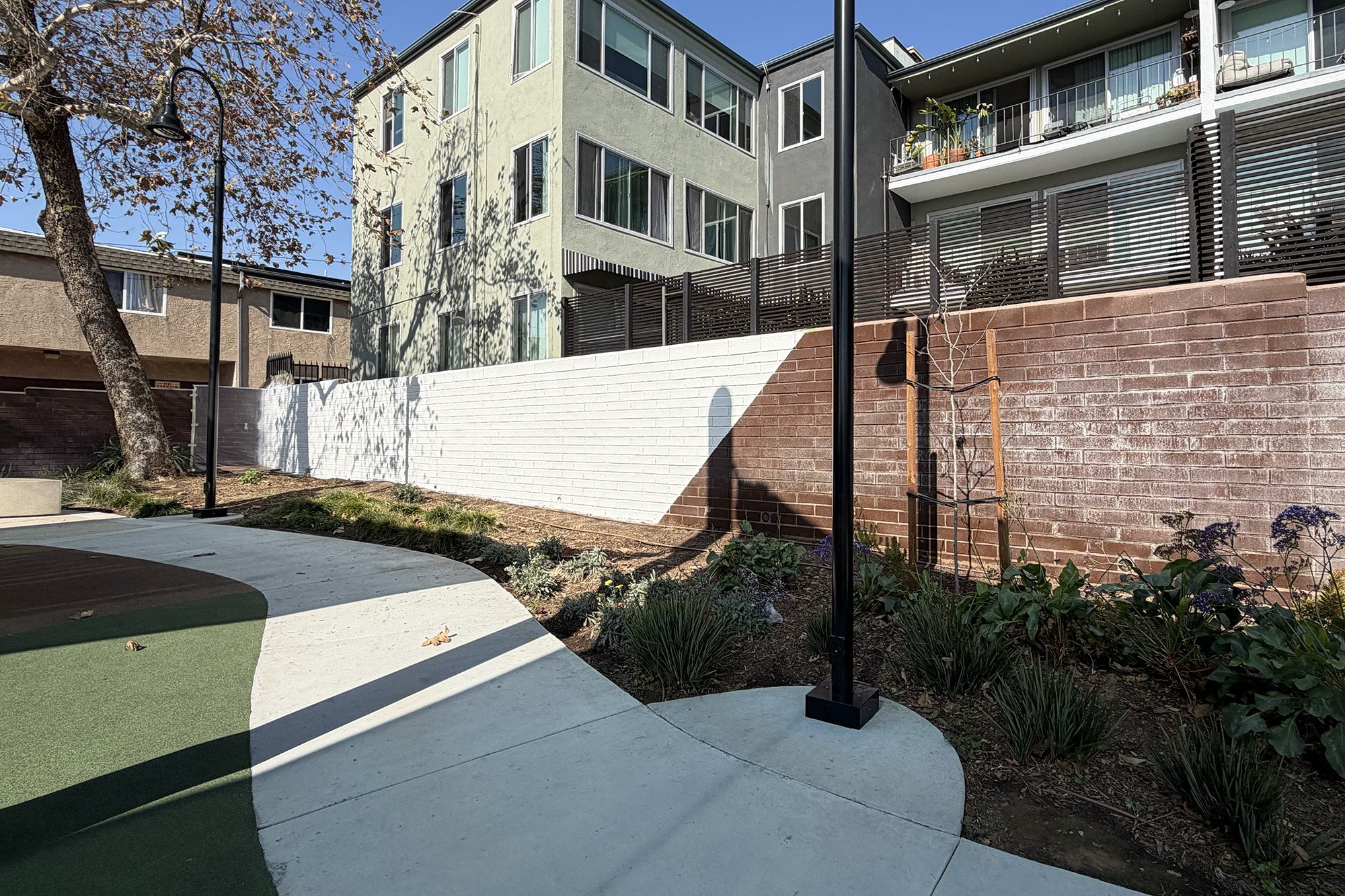
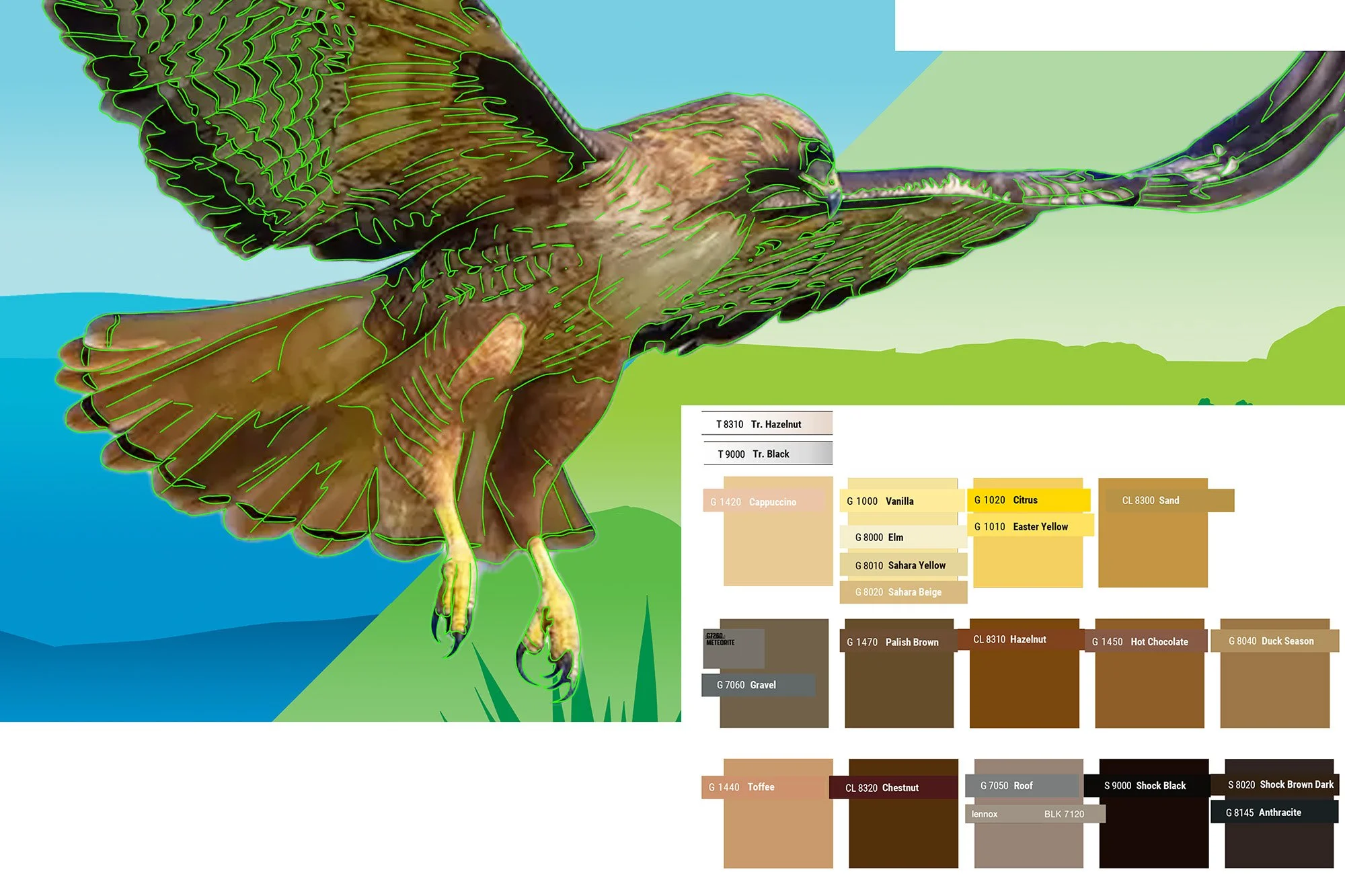
That’s why I’m grateful to Signal Hill’s Public Works team for partnering with us the right way. They helped pressure-washed the wall with TSP, repaired the coping, and cleared any irrigation and landscaping that were touching the surface. We then spent two full days priming and back-rolling to create a solid foundation so the topcoat can truly stand the test of time. After completing the mural, we applied a two-part protective coating system by Mural Colors to add an additional layer of durability. A solid long-term maintenance plan — including scheduled coating refreshes and detailed documentation of every color used — ensures the mural can be properly cared for and preserved for years to come.

Thank you to Swank One (Hawk) and John Park (Zinnia Flowers) for all their help! Also, a shout out to Shane Jessup for his assistance on prepping the background.
Mural Design
Background Concept: Signal Hill itself is shaped by movement. Two right-lateral strike-slip faults pushed the land upward, creating this elevated pocket that eventually became a major oil-producing site. I used the geological concept of the land being divided & lifted as the framework for the mural. The piece is visually split into four sections: History, Nature, Landmarks, and Culture.
History: Long before the city existed, the Tongva lived throughout this region. Because of its elevation, Signal Hill offered a clear line of sight across the Los Angeles Basin and all the way out to Santa Catalina Island—up to 26 miles on a clear day. It was an ideal place for visible smoke signals, which is how the city eventually got its name.
I also included a tribute to the Deni family water tower perched above the reservoir. While oil is undeniably part of Signal Hill’s story, I chose not to focus on pump jacks. That imagery has been covered heavily in other public art, and given the complicated relationship many people have with fossil fuels today, I wanted to approach the history from a different angle.
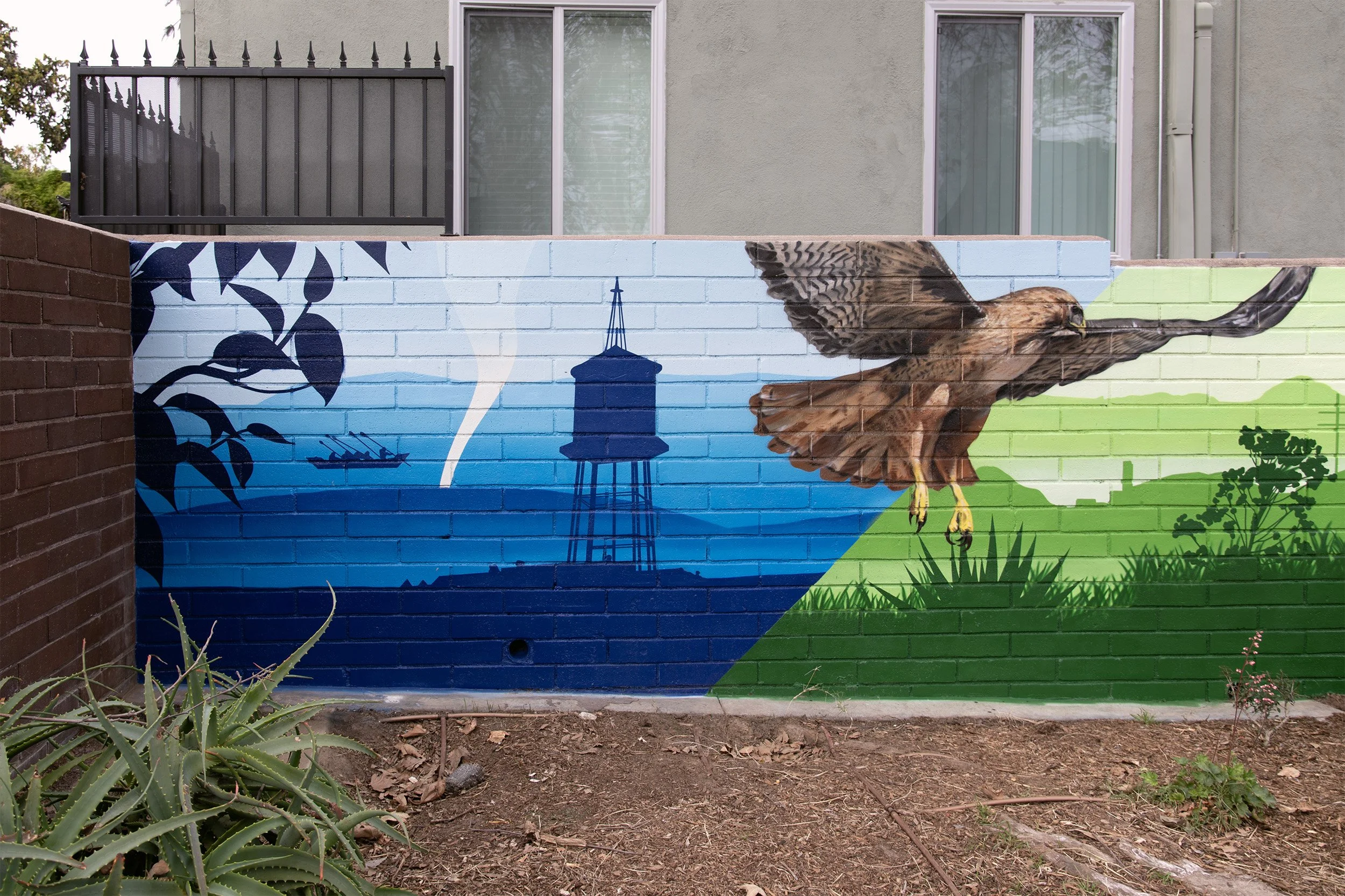
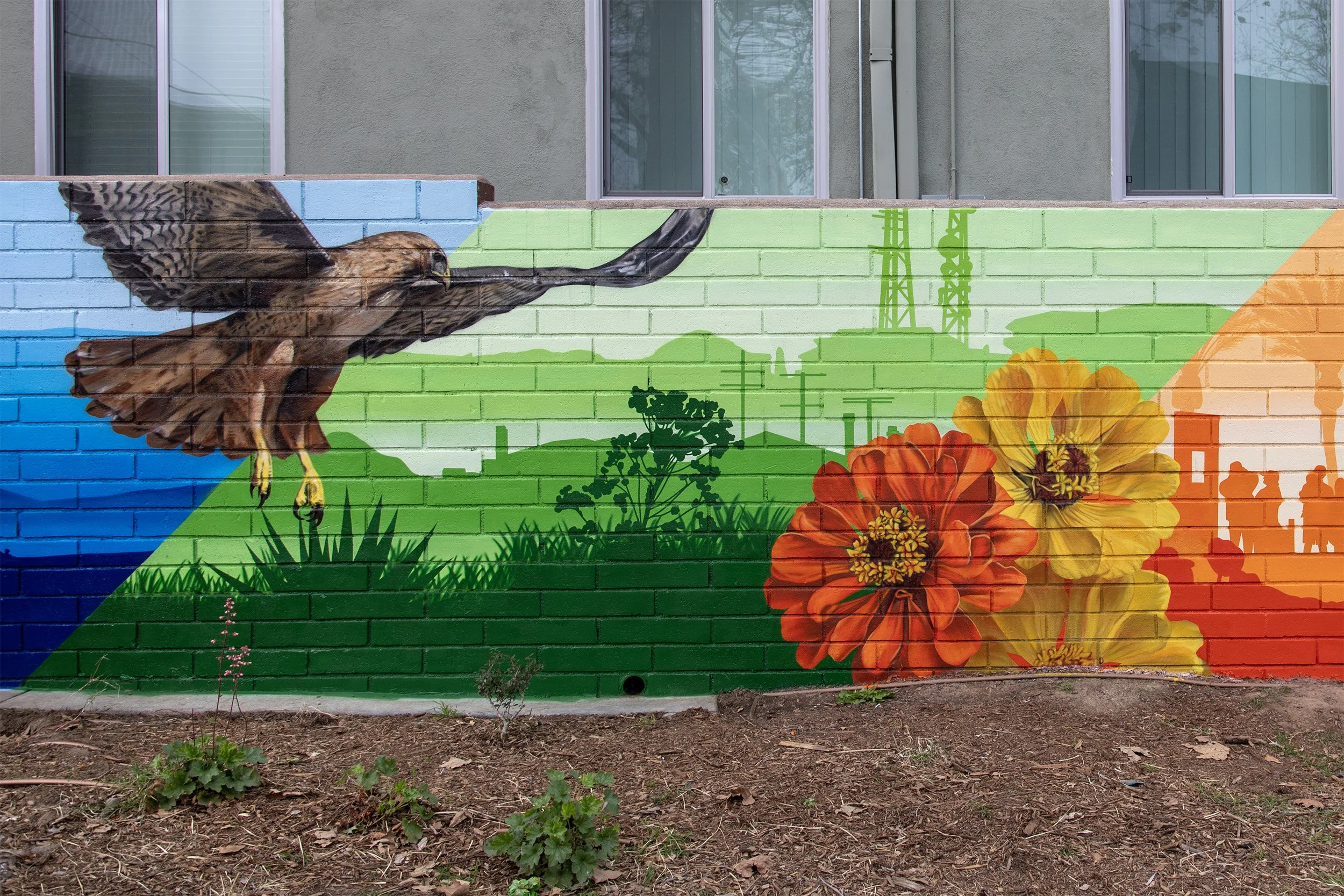
Nature: Nature felt essential here. I highlighted native plants and animals that are meaningful to the region—milkweed, agave, and poppies reflecting the local landscape. Zinnias, the city’s official flower that appears on its seal, are woven throughout the mural as a subtle nod.
The red-tailed hawk became a central symbol. With its high flight and sharp vision, it represents perspective, ancestral connection, resilience, and that enduring spirit that feels very much tied to Signal Hill.
Landmarks: Signal Hill is known for its 360-degree sunset views. If you’ve ever stood on top of the hill, you know it’s something special. I wanted to capture that feeling—those warm skies and expansive horizons.
The iconic palm trees at Hilltop Park, the public sculptures enjoyed by locals, and even the antennas at the summit all made their way into the design. Those antennas felt poetic to me—modern-day “signals” sitting atop a place historically known for sending them.
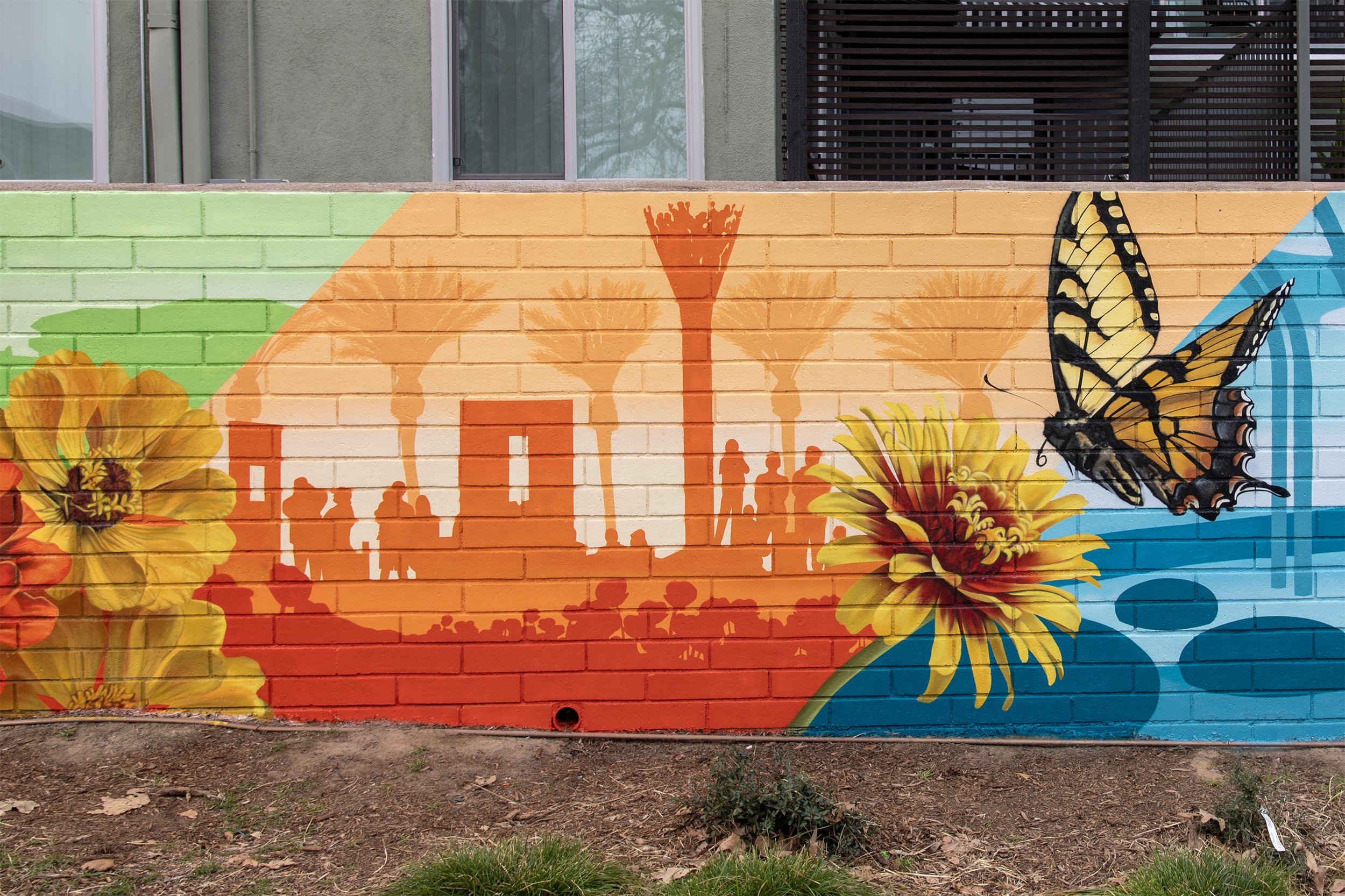
Culture: At its core, Signal Hill is a residential community, so I included the homes climbing up the hillside. A butterfly moves through the composition as a symbol of growth and transformation.
The kids playing at Hillbrook Park are positioned in a way that echoes the famous “Roughnecks” sculpture—but reimagined in a more whimsical, playful style. It’s a subtle blend of past and present.
And finally, there’s a girl blowing bubbles. They float past the edge of the mural, carrying the words the city chose—“GROW,” “HILLBROOK PARK,” and “PLAY.” I loved the idea that the last gesture wouldn’t be contained by the wall, that it would spill outward the way the energy of the park does every day. At one point while I was painting, real bubbles started drifting past me—kids laughing, running through the playground just a few feet away. For a second I couldn’t tell if life was imitating art or the other way around. It felt like the mural had already become part of the rhythm of the park before it was even finished.
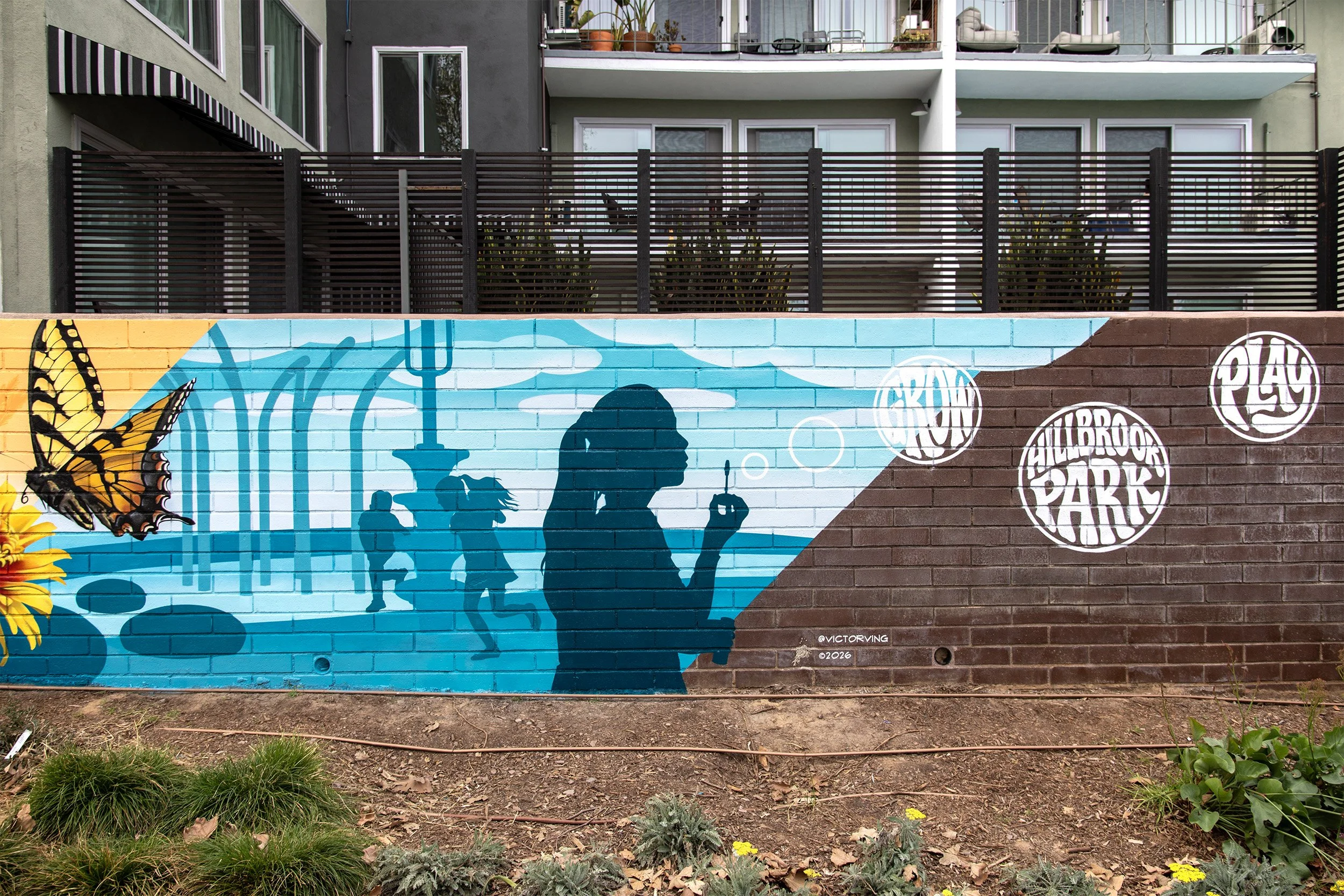
In the end, this mural isn’t just about geology or history or landmarks. It’s about layers. About movement. About a community shaped by forces both natural and human—and the kids who will grow up running past this wall without ever knowing how much thought went into it. And maybe that’s the best part of it all. I really look forward to coming back after all the landscaping is spruced up in the Spring time.
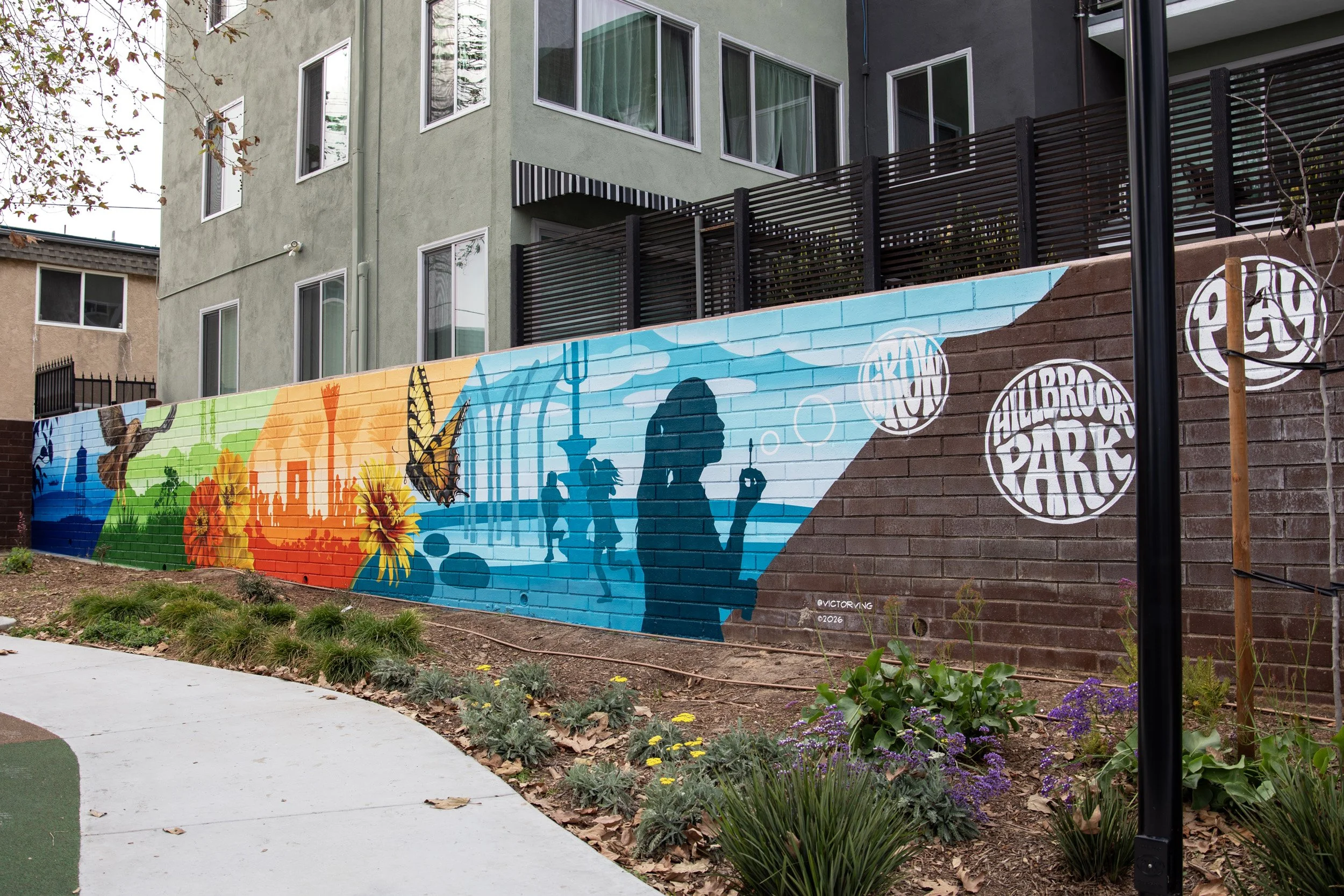
Title: Signal Hill: The View from Here
Year: 2026
Mural Size: 6'H x 45’W
Location: Hillbrook Park / 1865 Temple Ave, Signal Hill, CA 90755